
Design and Analysis of a Model Satellite
During my junior year in Mechanical Engineering, I attended two student organizations, RASAT and Bumerang. The aim of both of them was to compete in Teknofest. Unfortunately, due to Covid, after successful Preliminary Design and Critical Design Reports, the manufacturing and competition logistics prevented us from finishing our project. However, I've acquired valuable computer skills during the preparation.
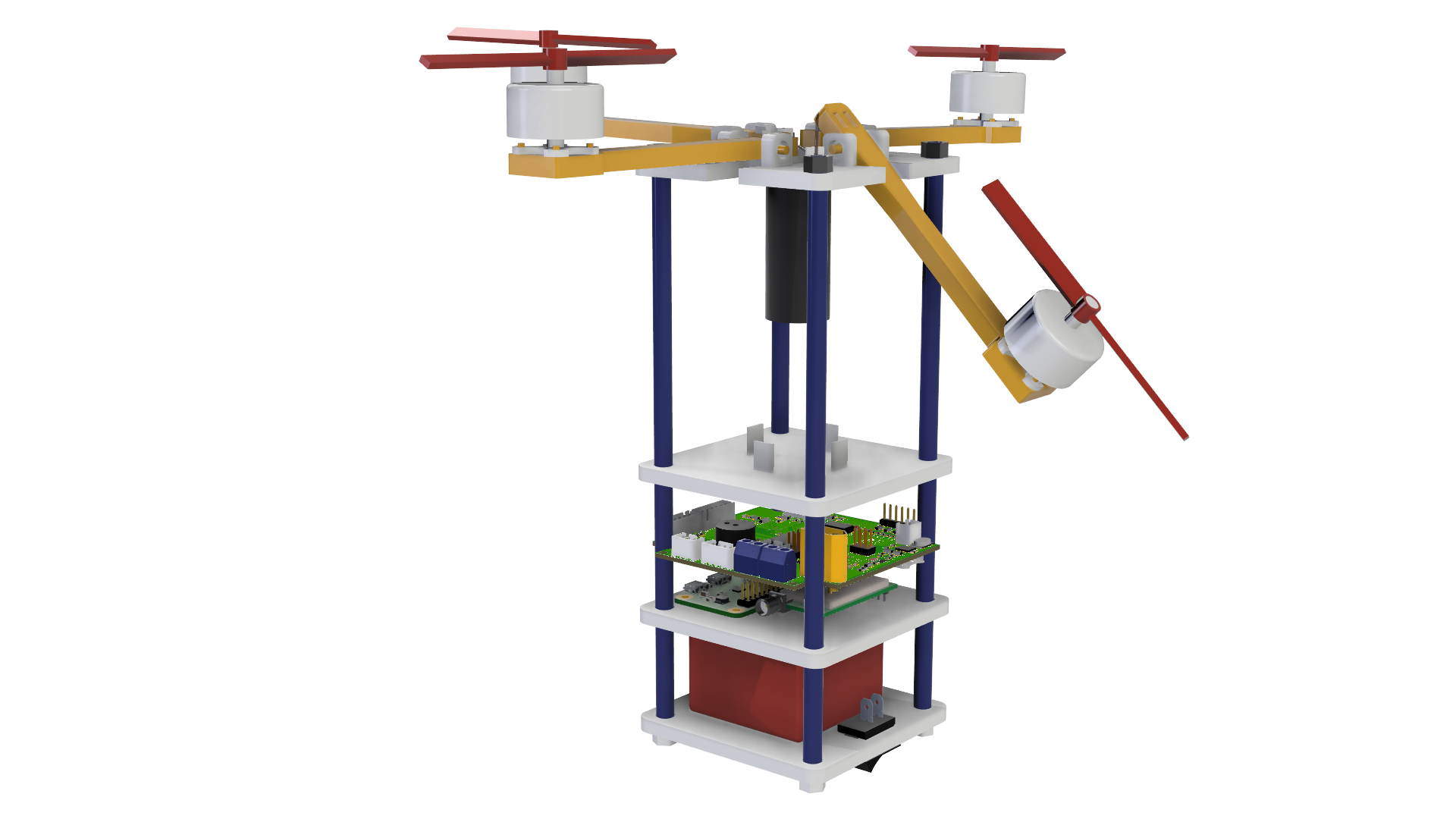
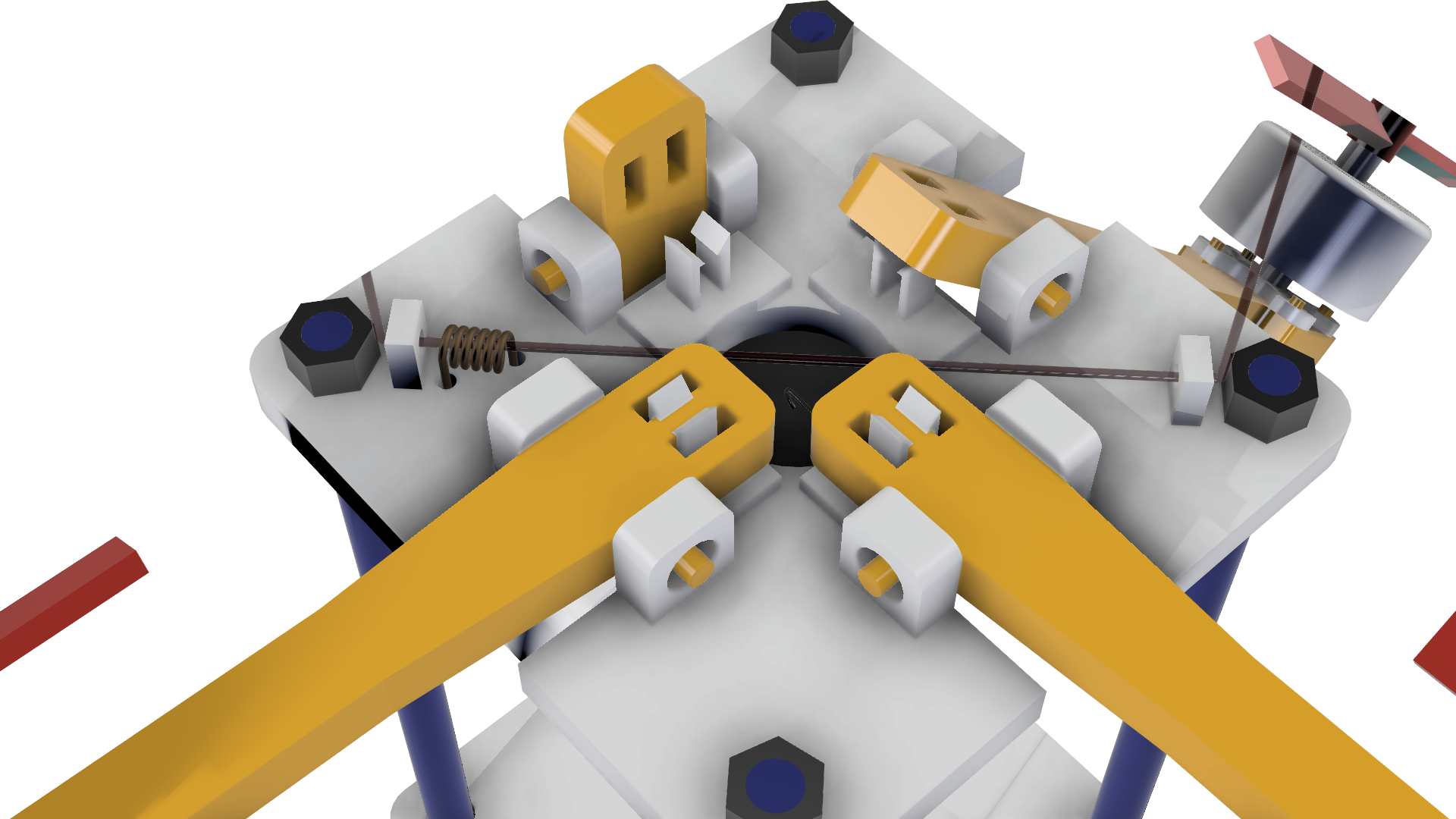
RASAT Team designed a CanSat that can communicate with a ground station and, after being separated from the launch vehicle, land in a controlled manner using rotary wings. I was the leader of the mechanical design group and created the whole design using Autodesk Fusion 360 computer-aided design software. The most challenging part of the design was to satisfy the dimensional requirements. Multiple propellers are used to produce enough thrust to land the satellite safely, resulting in a broad cross-section. Our solution was to fold the structural connectors of the propellers to the main body. Motors create a moment that lifts the arms and locks them to the clamp system. This system was the only physically tested part of the design in terms of the mechanical structure due to its critical role in the mission, and it worked.
During our preparation, we conducted weekly meetings with the whole team, including electronics and software groups. Thanks to those meetings, I got accustomed to their jargon and learned many new terms.